Manufactured Outrage and the Politics of Distraction

In a country edging closer to multiple systemic crises, including rising poverty, collapsing infrastructure, and a public increasingly exhausted by cultural division, the decision of a sitting MP to publicly oppose a proposed ban on first-cousin marriage does not come across as brave or bold. It feels more like a last-ditch pitch for attention.
On paper, there is a discussion to be had. One might reasonably argue that health education should precede legislation when it comes to complex cultural practices. But in politics, context matters. Timing matters. So does tone. And perhaps most importantly, so does the choice of issue.
Because, to be honest, no politician chooses to speak on something this sensitive unless they are trying to achieve something beyond the issue itself. In most cases, it is one of two things.
The first is calculated provocation. In this scenario, the MP is not out of touch but highly aware. He is deliberately playing the culture war card, disguising division as debate, and using identity to capture headlines and dominate the news cycle. The goal is not to advance policy. It is to stir reaction. This is controversy used as a strategy, and outrage used as currency.
The second possibility is more troubling. Perhaps he is sincere. Perhaps, in the middle of a housing crisis, pressure on the NHS, and widespread economic hardship, he genuinely believed that this was the issue to prioritise. If that is the case, then the concern is not strategy but judgment. And it raises serious questions about whether such a person should be making decisions on the public’s behalf.
Either interpretation is disqualifying in its own way.
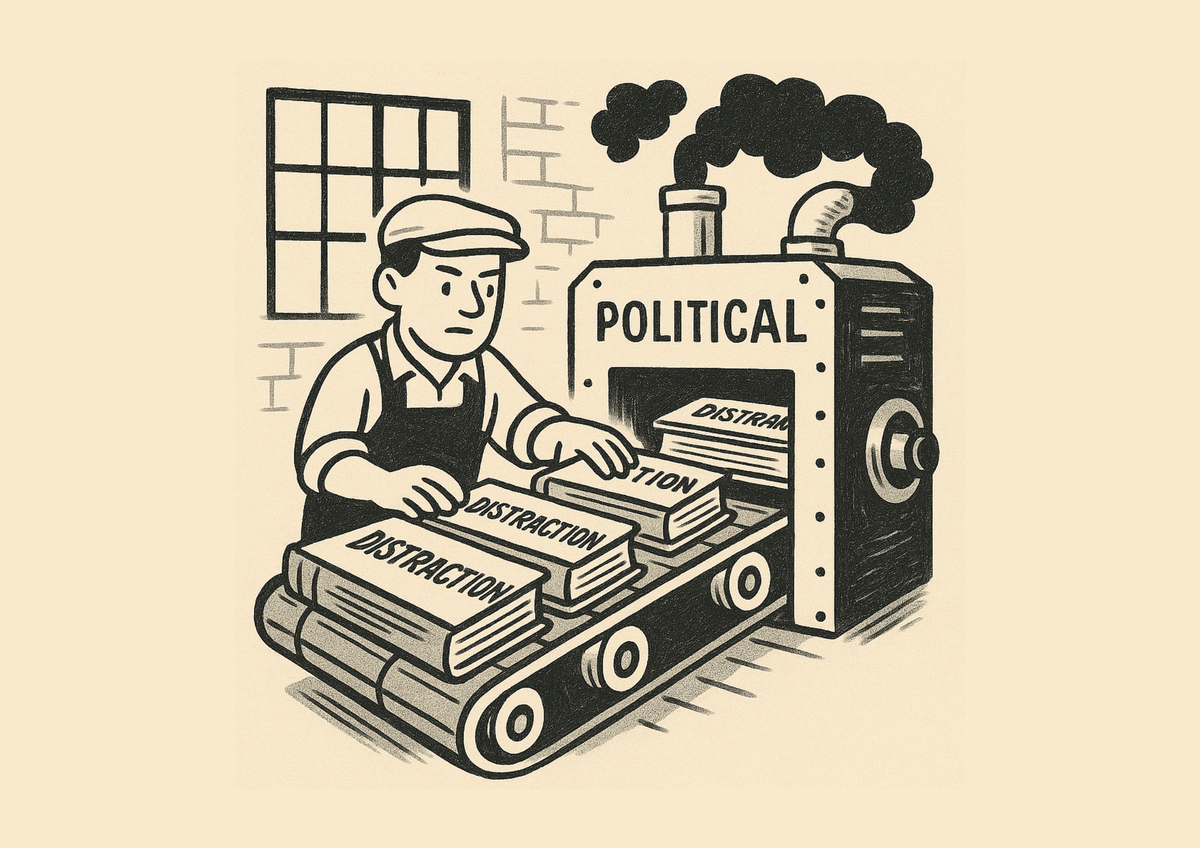
When viewed in isolation, this may seem like one politician going off-script. But step back and a larger pattern emerges. Across the political spectrum, particularly on the populist right, identity-based issues are increasingly being used as a distraction. These flashpoints are being elevated not because they are the most urgent matters of the day, but because they are the most divisive. These are not real debates about public policy. They are engineered conflicts designed to generate clicks, shares, and tribal loyalty.
So when an MP chooses to spotlight an issue with limited practical impact but high cultural friction, it is fair to ask what problem they are actually trying to solve. And more often than not, the answer has little to do with improving people’s lives.
At its core, this situation is not just about the validity of the argument. It is about the credibility of the messenger. If a public figure’s sense of urgency is so distorted that they elevate fringe debates while millions struggle with housing, health care, and affordability, then they are not leading. They are performing.
And if politics becomes performance, we all lose.